Concrete contractor
Concrete driveways, slabs, sidewalks, and stamped concrete for homes in Fort Worth and nearby cities.
- Concrete Driveway Building
- Driveway Installation
- Driveway Repairs
- Concrete Sidewalk Building
- Stamped Concrete Services
Dallas sits on the Blackland Prairie, a dense clay formation that runs through the heart of North Texas and is among the most reactive soil in the country. In neighborhoods like Lakewood, Oak Cliff, East Dallas, and the M Streets, the clay composition is especially high, and homes built before 1970 have been through decades of shrink-swell cycles that accumulate damage over time. Newer construction in areas like Preston Hollow uses post-tension slabs engineered to flex with soil movement, but even these show stress after years of North Texas drought and rain cycles. Mature live oaks, pecans, and post oaks throughout established Dallas neighborhoods draw moisture from the soil near foundations, adding a localized settlement risk that varies lot by lot.
Dallas, TX
TX Service Area
Communities we serve
Dallas, TX
Concrete Contractor
Dallas sits on some of the most reactive clay soil in North America. The Blackland Prairie formation beneath the city is more than 60 percent clay in many areas, and it can gain or lose significant volume between wet and dry seasons. In East Dallas, Oak Cliff, and the M Streets, the clay composition is particularly high. Homes built before 1970 in these neighborhoods have been through enough shrink-swell cycles to accumulate real structural stress. Foundation repair in these areas often involves addressing both the slab movement and the masonry damage that follows from it.
Mature trees are a significant factor in established Dallas neighborhoods. Live oaks, post oaks, and pecan trees are common throughout Lakewood, Preston Hollow, and Oak Cliff, and their root systems extend well beyond the tree canopy. Those roots draw moisture from the soil near the foundation, creating localized dry zones that cause differential settlement. One side of a slab can drop while the other stays level, producing the sloping floors and sticking doors that homeowners notice first. Brick and block work and masonry repair are often needed after the foundation is stabilized.
We handle residential and commercial projects across Dallas. Older residential neighborhoods generate foundation repair, masonry repair and maintenance, and concrete repairs. Newer construction in areas like Preston Hollow and University Park generates slab foundation building, stamped concrete services, and concrete driveway building. Commercial properties along major Dallas corridors need concrete parking lot building, concrete sidewalk building, and retaining walls. We are a family-owned business with over 15 years of experience serving clients with foundation and concrete needs across the Dallas area.
At a glance
Foundation repair is the dominant service in Dallas because the Blackland Prairie clay beneath the city generates constant slab movement across every era of construction. Masonry repair and maintenance is in high demand in older neighborhoods like Lakewood and the M Streets, where stair-step brick cracks and mortar failure are direct results of foundation movement. Cracks, settlement, and leaks are a combined service need in pre-1970 homes where decades of soil cycling have worked through both the slab and the masonry above it. Concrete repairs and concrete leveling address sunken driveways, sidewalks, and patios that shift with the same clay that moves foundations.
Concrete driveways, slabs, sidewalks, and stamped concrete for homes in Fort Worth and nearby cities.
Brick, block, and custom masonry work for homes and yards in Fort Worth and the surrounding cities.
Foundation drainage, leak repair, and waterproofing for homes in Fort Worth and the Dallas-Fort Worth area.
Remodeling, flooring, and general repairs for homes in Fort Worth and nearby cities.
Worked with us?
Leave a ReviewWorked with us?
Leave a ReviewNo qualifying reviews with text to display yet (only 4+ star reviews with a written comment are shown).
Serving Dallas, TX
Our crew knows Dallas, TX. We will show up on time, assess the job honestly, and give you a clear written number before asking you to decide anything.
Also serving across the Dallas-Fort Worth Metroplex:
Common questions from Dallas, TX customers about our services, process, and coverage.
Reliability in these neighborhoods comes down to whether the contractor understands the specific soil conditions and housing era. Lakewood and Oak Cliff have pre-1970 homes on some of the most reactive clay in Dallas, and the repair plan needs to account for decades of accumulated movement, not just the current visible damage. We have over 15 years of experience with foundation and concrete work in North Texas clay conditions, and we assess each property individually before recommending any repair approach.
Homes in Lakewood and East Dallas were built on some of the most reactive Blackland Prairie clay in the city, and they have been through decades of wet-dry cycles that accumulate structural stress over time. Pre-1970 construction used foundation designs that were not engineered to the standards used today. Mature trees in these neighborhoods also draw moisture from the soil near foundations, creating localized dry zones that cause differential settlement. The combination of old construction, reactive soil, and tree root activity makes these neighborhoods among the most active for foundation work in Dallas.
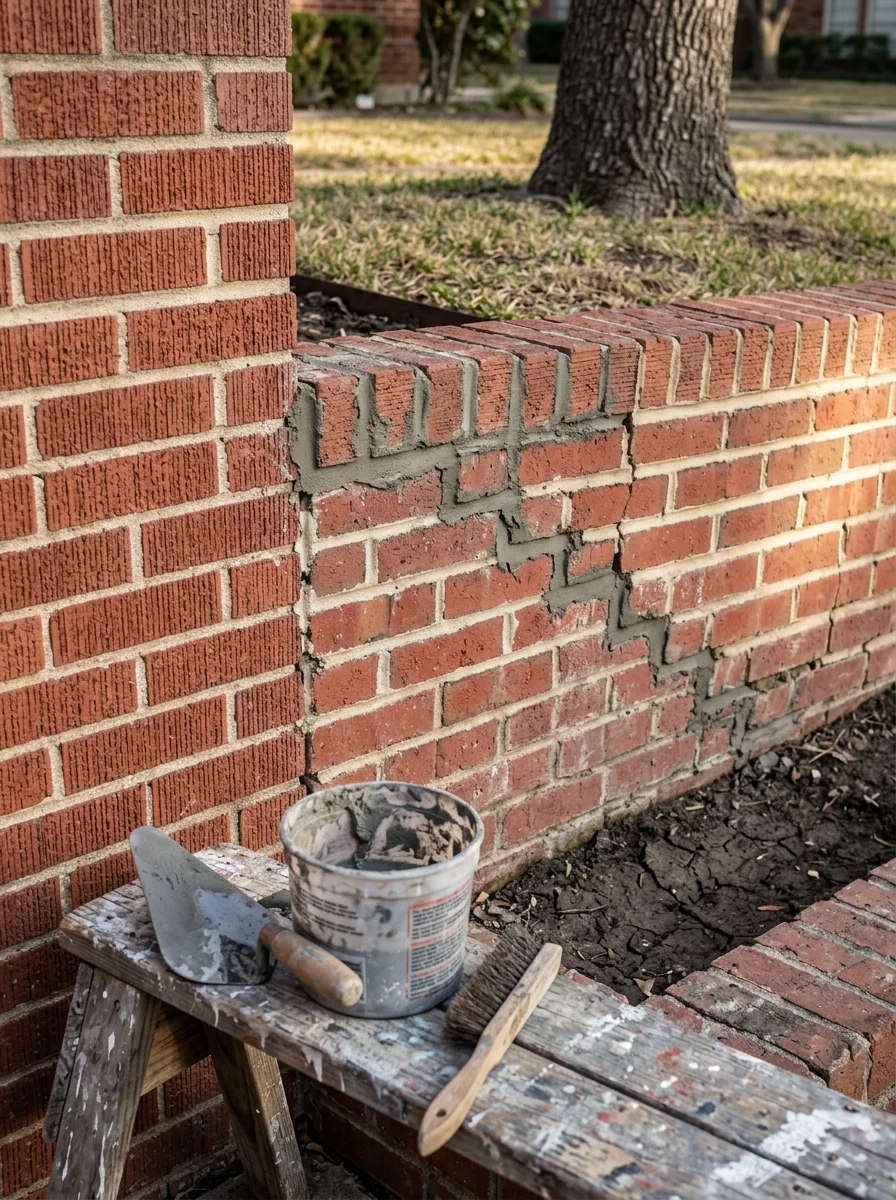
Yes. In Dallas, masonry damage and foundation movement are closely linked. Stair-step cracks in brick veneer and mortar failure are among the most visible signs that a foundation has shifted. We handle both the foundation repair and the masonry repair and maintenance needed to restore the structure above it. Addressing only one without the other leaves the repair incomplete.
Live oaks, post oaks, and pecan trees throughout established Dallas neighborhoods draw moisture from the soil near the foundation. That localized moisture loss creates dry zones that cause one part of the slab to drop while another stays level. The result is differential settlement, which produces sloping floors, sticking doors, and diagonal cracks in drywall. Foundation repair in tree-heavy lots often needs to account for this localized effect, and brick and block work or masonry repair may be needed after the slab is stabilized.
Call us directly. Real answers, no scripts.
Stop by, call, or book online — we're always nearby when you need us.
Phone
(817) 300-5535Hours